[Demon Slayer/12 Demon-moons]Akaza, the first Twelve-demon Moons to appear in the series, a martial artist and battle maniac who pursues the ultimate state
(There may be major spoilers for Demon Slayer. I referenced and received assistance from AI, so I would appreciate it if you read carefully.)

01) The Reason Akaza Abstained from Cannibalism and Strived to Reach the Ultimate Level
Akaza is the first Blood Demon of the 12 Demon Moons to appear in the manga *Demon Slayer*. He is a martial artist and battle maniac who prioritizes strength above all else. The reason he continued to train endlessly and strive to become stronger even after becoming a Blood Demon goes beyond a mere craving for power; it is deeply connected to an inner desire stemming from the poverty and painful environment of his life as a human.

First, Akaza possesses a strong desire to reach the ultimate level. His martial arts are not merely a display of power, but an endless pursuit of perfection as a strong individual. Throughout the story, he offers sincere praise to strong opponents and respects them for who they are. This behavior reflects his philosophy of yearning for strength alongside a spirit of challenge. In particular, the sight of him trembling with awe as he feels the fighting spirit emanating from a powerful opponent throughout his entire body reveals his obsession and passion as a martial artist.
While those who become Blood Demons usually seek to increase their power through cannibalism, Akaza rejected this practice and voluntarily restrained his cannibalistic instincts. This demonstrates his unique personality and values. He adheres to a strict principle of never killing or eating women, clearly distinguishing him from other Blood Demons who possess twisted tendencies. In this way, he chose his own path of strength, seeking to reach true martial prowess through rigorous training.
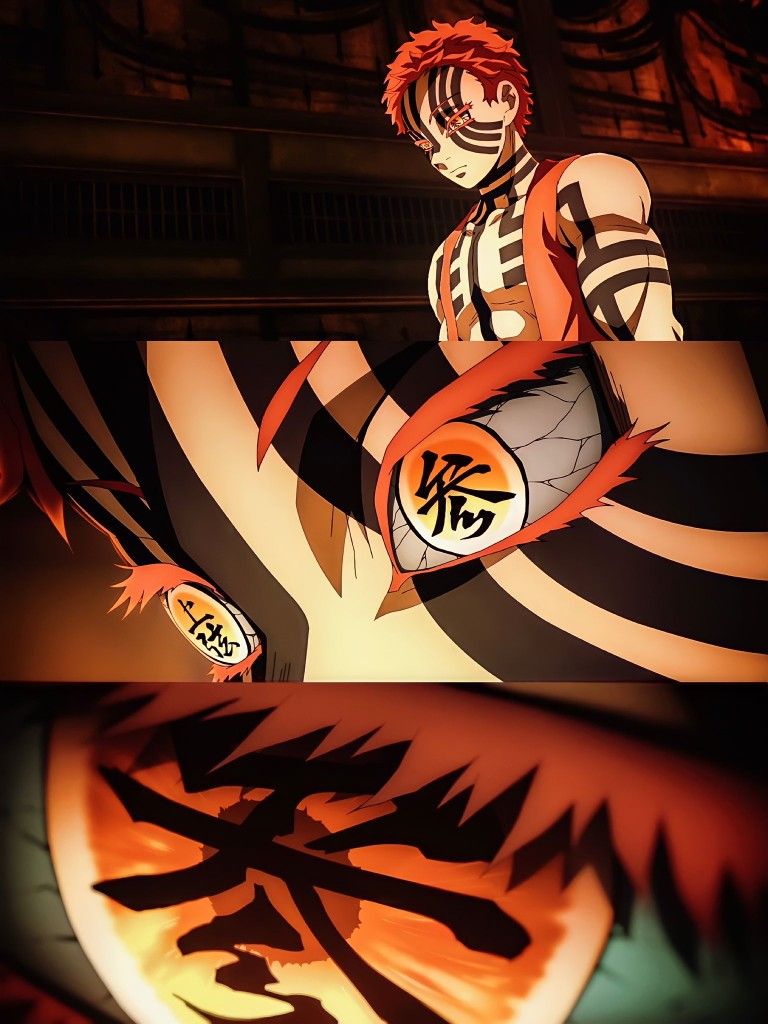
In particular, Akaza’s impoverished and powerless environment during his human days serves as a crucial key to understanding his upbringing. Having lived a life of despair since childhood, Akaza felt the misery of powerlessness more deeply than anyone else, and this became the very source of his obsession with strength. His training and pursuit of the supreme realm are not merely the desires of a martial artist, but are imbued with a desperation to overcome the past that oppressed and tormented him. In addition to pure strength and discipline, Akaza harbors a deep aversion toward those he deems "weak." His attitude of seeking to eliminate the weak without hesitation, viewing them as ugly and repulsive, can be seen as a manifestation of his pride and resentment toward his past as a weakling. The root of his desire to become so strong is a complex mix of self-loathing stemming from his own weakness and a thirst for revenge.
Akaza also utilized Blood Demon Art solely as a tool to support his taijutsu. In other words, his focus was on the pure exploration and training of martial arts itself, clearly distinguishing him from other Blood Demons who rely on Blood Demon Art. This reflects his stubbornness, pride, and the philosophical foundation of ceaseless self-discipline.

Furthermore, Akaza stands in stark contrast to Upper Rank II Douma. Unlike Douma, who builds his power primarily through Blood Demon Art and cannibalizes only humans and women, Akaza rebels against this, following his own principles while retaining some memories and emotions from his time as a human. These aspects can also be described as the inner ethics and humanity that Akaza had to uphold throughout his journey toward infinite power.
In summary, Akaza’s refraining from cannibalism and his determination to grow stronger even after becoming a Blood Demon was not merely a pursuit of power, but rather a result of self-overcoming stemming from the pain and despair of his life as a human being, as well as respect for the strong, abhorrence of the weak, and a will to protect his own sense of justice and ideals. This complex inner self adds depth to his image as a ‘martial artist,’ making him seem more than just a simple villain.
02) The Reason Akaza Hates Douma
02-1) Akaza’s Abstinence from Cannibalism and Strength Building Centered on Martial Arts Training

Even after becoming a Blood Demon, Akaza strictly restrained himself from increasing his strength through cannibalism, unlike ordinary Blood Demons. While Blood Demons generally grow stronger quickly by consuming human blood and flesh, Akaza engaged in cannibalism only to the bare minimum necessary to avoid starvation and did not rely on it. Instead, he focused entirely on increasing his strength through martial arts training and physical combat.
Akaza’s unique approach stems from the spirit of a martial artist and a strong sense of self that he cultivated since his days as a human. He believed that true strength lay in the realm of martial arts attained through endless training and struggle, rather than relying on Blood Demon Art or convenient methods. As a result, he thoroughly excluded the act of killing or eating women to uphold his ideals and principles.
This stands in stark contrast to other Blood Demons, particularly Hantengu, Douma, and Gyokko. These individuals exhibit psychopathic tendencies, relying heavily on Blood Demon Art to attack only humans, particularly women, in order to become stronger; however, unlike them, Akaza adheres to his own values and walks the path of a martial artist.
02-2) The Essence of Hatred and Conflict Regarding Douma

The Blood Demon Akaza detests the most is Douma, who is from the same 12-Demon Moons and has surpassed him to become Upper Rank II. As a Blood Demon who relies on Blood Demon Art and enjoys hunting only humans, especially women, Douma stands in stark contrast to Akaza's martial arts philosophy.
Douma deeply provoked Akaza by giving him harsh advice: "If you want to get stronger faster, eat plenty of nutritious women." This remark was a provocation that directly challenged Akaza's definition of "strength." This is because Akaza chooses the path of becoming strong through training rather than relying on Blood Demon Art, and he absolutely does not tolerate attacks on women or cannibalism. Furthermore, Douma irritated Akaza by the fact that, despite being higher in the direct hierarchy, he built his power in ways Akaza did not approve of and committed murders as if they were a game. This difference in attitude went beyond mere personal feelings, leading to a deep conflict that negated each other's very ways of existence.
Consequently, Akaza does not hesitate to throw punches when Douma acts against his will, and he does not suppress his complex emotions toward Douma, who is stronger than anyone else. While his fundamental principle is respect for the strong, he clearly displays a side of cold hostility if the essence and path of that strength differ.
02-3) The Influence of Akaza’s Values and Experiences as a Human on His Hatred of Douma

Akaza’s life as a human was unfortunate and painful, and the world he inhabited was a very ruthless society governed by the law of the jungle. In such an environment, he accumulated many wounds and traumas while protecting those weaker than himself or striving solely for strength. For this reason, he holds firm standards regarding how to build strength. Douma’s choice of shortcuts and cruelty simply to become stronger faster stands in direct opposition to Akaza’s philosophy. Akaza strives to become stronger through legitimate means—specifically through his martial arts and training—and possesses a strong will to strictly adhere to moral standards; this fundamentally clashes with Douma’s actions and values.
Furthermore, Akaza feels deep revulsion toward Douma’s "psychopathic" tendencies, which view humans merely as prey. On the other hand, even after becoming a Blood Demon, Akaza has not lost the emotions and memories of his human life, particularly his feelings for his former fiancée, Koyuki. He strictly adheres to the principle of never attacking or eating women, consistently demonstrating his refusal to completely abandon his humanity.
These complex internal dynamics and differences in values are the core reason why Akaza goes beyond merely accepting Douma as a superior in the hierarchy, leading to a relationship of hatred and conflict. 02-4) Endless Conflict Fueled by Differences in Attitudes toward Strength

Among the hordes of Blood Demons, Akaza occupies a unique position due to his thorough obsession with and dedication to strength, as well as his stubbornness in upholding his martial arts philosophy to the very end. His refusal to resort to cannibalism or shortcuts involving Blood Demon Art, and his pursuit of the ultimate limits of physical power solely through his own strength, demonstrates an exceptional presence even among the Upper Rank members.
Douma fails to understand Akaza’s stubbornness and pride; at times, he mocks his attitude or believes his own methods are more efficient. These differences in their definitions of strength and methodologies ultimately made their conflict inevitable.
During their confrontations and clashes, Akaza sought to surpass Douma and reach the supreme realm on his own; however, his failure to do so further fueled his anger and loathing. This stems from Akaza’s human emotions and pride, as well as his revulsion at the thought of someone easily disregarding or trampling upon the "path to becoming strong as a martial artist" that he considers so important. On the other hand, Douma also regarded Akaza merely as an annoying and unnecessary nuisance, clearly establishing their mutual hostility. Even for Upper Rank members, the difference in their approaches to pursuing strength creates an insurmountable gap.
As such, Akaza's dislike of Douma goes beyond the mere fact that he is a "rival who has surpassed him"; it stems from a fundamental clash between their differing philosophies of strength, values, and attitudes toward humanity. Through this, Akaza demonstrates his determination to uphold his ideals and stubbornness to the very end. Akaza's obsession with strength and his pride as a martial artist materialized into restraint regarding Blood Demon Art and cannibalism, as well as a strong hatred for Douma, shaping his actions and mindset.
03) Hakuji (Akaza) Blames the World for His Father’s Death Due to Poverty
03-1) Hakuji, the Filial Son Who Deeply Loved and Nursed His Sick Father
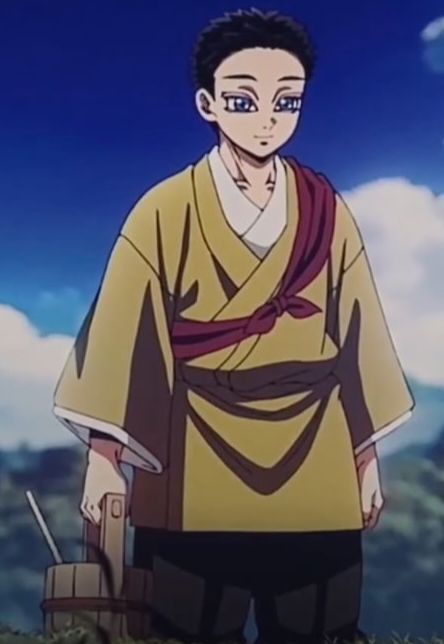
Hakuji, a man of the Edo period, was a filial son who deeply loved his ailing father and cared for him patiently. He never found nursing his father bothersome, and despite the stigma of being a former convict, he was a quiet and gentle boy who got along well with his neighbors. Above all, the fact that Hakuji began pickpocketing to raise money for his sick father's expensive medicine, rather than committing crimes out of his own greed, clearly demonstrates his good nature.
Although he was a poor and powerless young boy, his desire to help his father was pure and sincere. It appears that his neighbors also understood his poverty and desperate situation and showed him a certain degree of tolerance. During this period, Hakuji was experiencing confusion and anguish between the family he had to protect and the world he had to live in.
03-2) Pickpocketing at a Young Age, Punishment, and Resignation
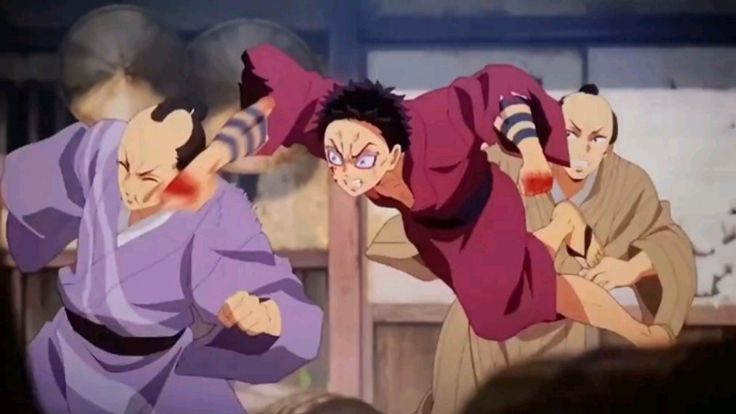
However, the pickpocketing he began at the age of eleven was an extremely difficult and arduous undertaking. Stealing from adults while still young was inherently dangerous, and Hakuji was caught almost every time and subjected to harsh punishment. The tattoos etched on his body were the very marks of that punishment. The tattoo reading "Sinner" reflects the reality of the time, where the impoverished Hakuji was labeled a criminal.
Despite his young age, Hakuji endured the punishment. In fact, during this process, he even received the abnormal reputation from officials of being a "demon's child." This was likely due to the extraordinary resistance and unyielding will he displayed. However, sometimes facing scoldings to "earn money honestly" and the desperate reality that "it is impossible because medicine is too expensive," he began to harbor deep resentment and anger toward his situation.
03-3) The Death of His Father, His Suicide, and His Anger Toward the World
One day, as Hakuji grew physically and mentally exhausted from continuous detention and punishment for pickpocketing, he received unexpected news. His frail father had taken his own life, unable to bear the thought of him suffering any longer due to his own guilt and anguish. His father’s last words were a desperate plea for Hakuji to live a righteous life, accompanied by self-reproach: “You suffer because you met such a worthless father.”
This tragic event became the deepest wound for young Hakuji, and the anger and sense of betrayal he harbored toward the world reached their peak. Through his father’s death, Hakuji experienced firsthand the harsh reality that “the poor are not even allowed to live,” and he developed a heart that cursed and rebuked the world.
He painfully realized that his father’s death was not merely a personal tragedy for Hakuji, but a catastrophe caused by structural poverty and social indifference. Hakuji’s bitter cry, “Go screw yourself, this world,” starkly reveals the emotions of despair and rage intertwined within him.
03-4) A Complex Inner Self Mixed with Resentment Toward the World and Self-Hatred

After his father’s death, Hakuji lost his purpose in life and began to wander. He could not find peace of mind for even a moment, harboring a complex mix of resignation, self-reproach, and anger toward the world. He fell into a complex psychological state where self-reproach for failing to protect his precious family due to his own helplessness and poverty intersected with resentment toward the world that had created that situation.
This inner world remained as a remnant even after he transformed into the Blood Demon Akaza, never completely erasing it and deeply influencing his pursuit of strength, self-discipline, and martial arts spirit. Amidst his ruthless slaughter and self-restraint, these experiences and emotions from his human days are one of the sources of Akaza’s unique strength.
03-5) A Childhood Stained by Pickpocketing and Punishment, and the Resulting Distorted Survival Instinct

Hakuji's childhood was riddled with pickpocketing and poverty. Although he had to endure the depths of despair while being arrested and tortured repeatedly, the harshness he suffered was not merely the experience of a criminal. It was intertwined with a desperate will to protect his family and an inner survival instinct that compelled him to live on, no matter what.
The society he faced was far too cruel to the poor, and this reality left his heart feeling even more hollow. He should not have been judged simply by the yardstick of the law; looking into the underlying circumstances, one cannot deny that social inequality and indifference played a significant role.
03-6) A Deep Bond with His Father and the Catalyst for Change
Memories of his father left Hakuji with a mixture of love and hate, sorrow, and human warmth. The tragedy of his father making an extreme choice out of concern for him triggered a decisive change in Hakuji's life. That boundless love and guilt ultimately served as a crucial foundation for transforming Hakuji into a completely different being—the demon ‘Akaza.’
Akaza hides deep within himself the pain, loss, and resulting emotions Hakuji experienced during his human life; however, these became the source of his craving for strength, his violent nature, and his ruthlessness toward his comrades and the weak. His attitude of respecting strength and despising the weak stems precisely from this deep-rooted inner pain and despair.
As such, Hakuji—or rather, Akaza—during his human years is stained by poverty, unfortunate circumstances, and the profound tragedy of his father's death. This tragedy is by no means unrelated to his obsession with strength, his extraordinary self-discipline, and his unique tendency to refrain from cannibalism, unlike other demons. Furthermore, it is evident that anger and a sense of injustice toward the world reside deep within his psyche. This demonstrates that Akaza is a key element in establishing his presence within the work as a complex and multi-dimensional character, going beyond a simple villain.
04) Hakuji, Who Lost His Life's Goal, and Keizo, Who Accepted Him as a Disciple
04-1) Young Hakuji, Wandering After Losing His Life's Goal
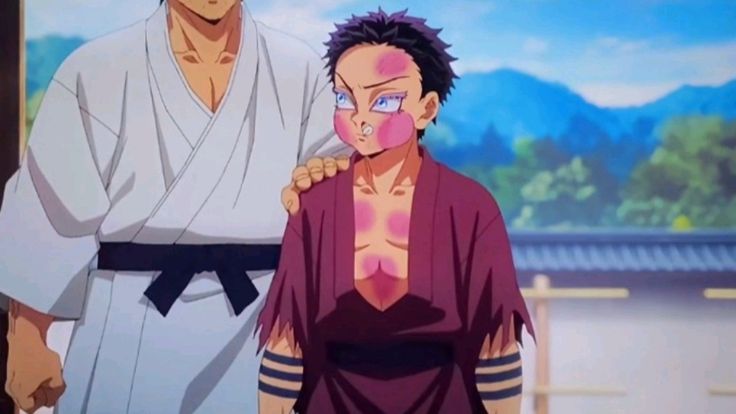
After his father's death, Hakuji harbored deep anger and resentment toward the world and completely lost his purpose in life. Despite his young age, he was unable to control his emotions and went around mercilessly beating people. What is surprising is the fact that, despite being only 11 years old, he displayed monstrous strength and fighting skills capable of subduing about five adult men on his own. Such extraordinary ability suggests a difficult upbringing, a strong survival instinct developed to endure it, and pre-existing innate martial arts talent.
However, it evokes a sense of pity to see just how much he wandered and unhesitatingly resorted to violence. During this period, while cursing the injustice of the world and his own misfortune, Hakuji could not find a proper direction or moral path in life; unable to restrain himself, he remained consumed by anger and aggression.
04-2) Meeting with Keizo and Acceptance as a Disciple
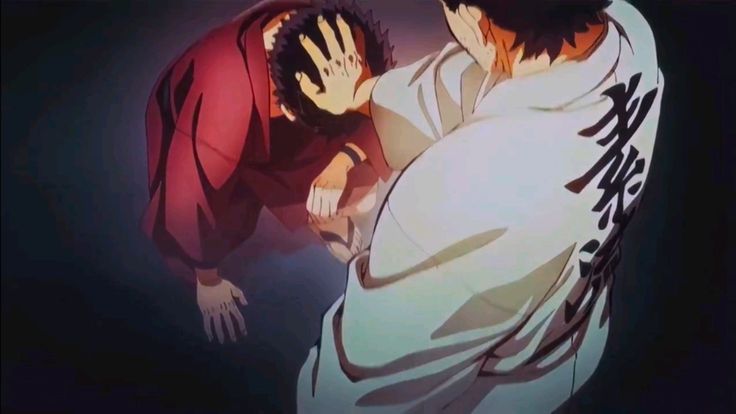
The person who took notice of Hakuji’s extraordinary fighting skills was none other than a master named Keizo. Keizo ran a lonely dojo called "Soryu" with not a single disciple. He made a living by working as a fixer at the dojo. He had a wife and a sick daughter named Koyuki, but unexpectedly, his wife suffered a tragedy when she drowned herself in a pond, exhausted from caring for their daughter.
Hakuji receives an invitation from Keizo to join his dojo and become a disciple. At first, he refuses the offer and swings his fists, but Keizo subdues Hakuji in an instant and takes him to the dojo. During this process, Keizo’s powerful yet warm character is revealed; when Hakuji asks about his past, Keizo accepts him with a generous smile, saying, "I beat you to a pulp earlier, so it’s fine."
04-3) The Meaning of a New Life Given to Hakuji by His Connection with Keizo
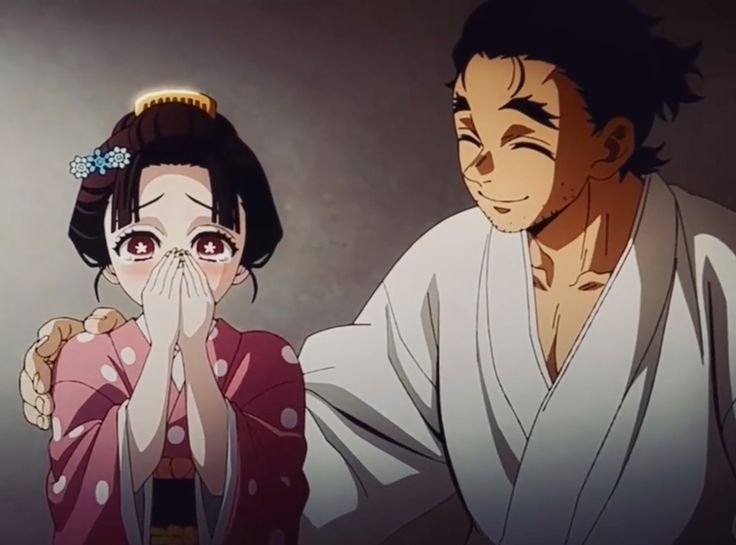
Keizo was more than just a mentor to Hakuji. He was the figure who opened the path for a second life and a new challenge for him. Hakuji trained at Keizo's dojo, learning and honing his martial arts skills; in the process, he gradually regained his composure after losing himself and began to form new goals.
In particular, his meeting with Keizo's daughter, Koyuki, provided Hakuji with great comfort and hope, serving as a crucial turning point for him to gain the strength to move forward toward 'life' once again. Even within Hakuji's gruff and rough inner self, the love and expectations of Keizo and Koyuki left deep traces.
04-4) The Root Reason Akaza Dislikes Tanjiro
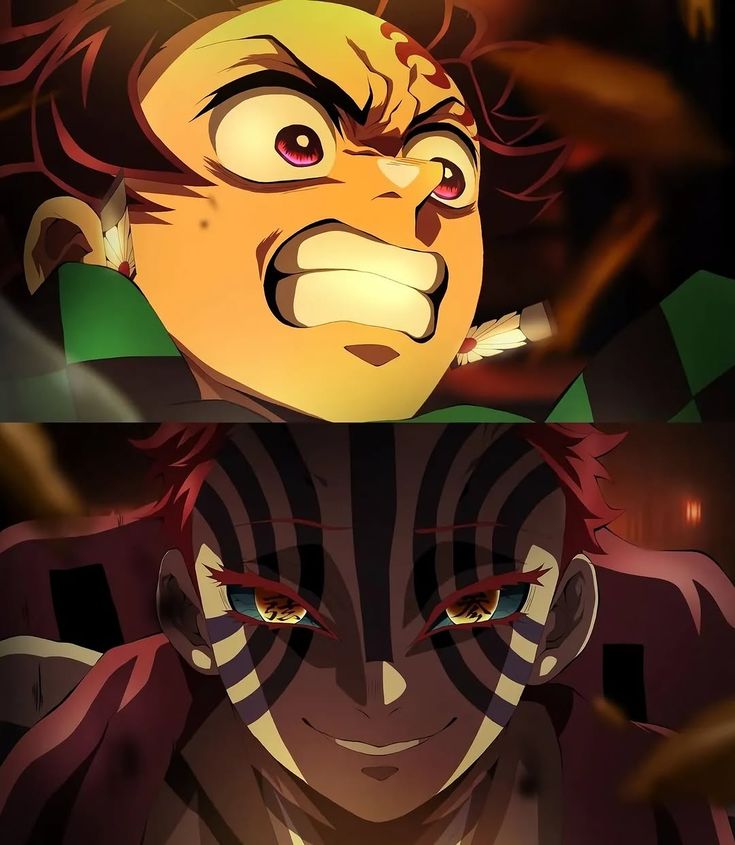
The reason Akaza instinctively and unhesitatingly disliked Kamado Tanjiro within the work is precisely because Tanjiro's uniquely upright and magnanimous personality and behavior resembled Keizo, whom Hakuji had experienced during his time as a human. In other words, Hakuji unconsciously recalls the pure memories of Keizo and their past, instinctively harboring resentment and wariness.
This has a significant psychological impact on Akaza's fighting style, forming complex emotional layers that go beyond mere hostility. As the unexpected shadow of the past intertwines with the harsh narrative of the present, this is a moment where Akaza's inner self is revealed in a more multi-dimensional way.
Hakuji had wandered mercilessly amidst the despair and anger of life, but he began to find his way through his connection with the figure of Keizo. Keizo was a figure who demonstrated that Hakuji, too, could once again reconcile with the world and himself through patience and love. This is a crucial narrative revealing that he is not merely a strong warrior, but a wounded human being, and it is an indispensable story for understanding Akaza's complex psychological structure within the work.
05) Hakuji truly tried to live like a human being, just as his father had wished! He really intended to!
05-1) The Meeting with Keizo and Koyuki, and New Hope

Hakuji meets Keizo's daughter, Koyuki, through Keizo's guidance. Koyuki was in a frail state, and upon seeing her, Hakuji was reminded of his own father and was unable to speak. Keizo asked her several times because he didn't even know her name, but Koyuki refused to tell him. While worrying about the scar on Hakuji's face, Koyuki showed him a warm heart.
As Hakuji nursed Koyuki, seeing her look apologetic toward him, he felt a reflection of his own father. He cared for her with great devotion, telling himself that he was innately strong and that he had experience nursing his father, so it would not be a problem. One day, Koyuki asked to go see a fireworks festival and told Hakuji to "leave her alone," but Hakuji vowed that he would take her there, even if he had to carry her on his back. Moved by his resolve, Koyuki sheds tears, but Hakuji does not fully understand the significance of it and remains somewhat cold, thinking that it would be difficult to be with her if she cried.
05-2) Finding Solace at Keizo Dojo

Keizo earned his living by running the martial arts dojo "Soryu." He lived with his ailing daughter, Koyuki, but he had suffered a tragic past where his wife, exhausted from nursing him, ended her own life by drowning herself in a pond. While spending time with Keizo, Hakuji learns how he runs the dojo and discovers that the number of students has not increased due to jealousy and conflict with neighboring swordsmanship dojos.
Hakuji finds deep comfort in his heart while living with Keizo and Koyuki at the dojo. For Hakuji, who had previously wandered aimlessly and resorted to violence, Keizo Dojo became an irreplaceable sanctuary. This environment served as the foundation for his gradual transformation, as he began to live a more humane and upright life. 05-3) Koyuki's Crisis and the Conflict with the Swordsmanship Dojo
However, unfortunately, the peaceful times did not last long. One day, the swordsmanship dojo master's son forcibly dragged the ailing Koyuki out, causing her to suffer an asthma attack. Panicked, he fled, and Koyuki nearly died. Enraged by this incident, Keizo and Hakuji began a conflict.
Hakuji fought back single-handedly, defeating all the dojo students and demonstrating astonishing strength and skill. In particular, the scene where he broke the real sword wielded by the master's son using his signature "Bell Breaking" technique astonished even the dojo officials. Moved by the breaking of the sword and the beauty of the battle, the master concluded a peace treaty with the Soryu Dojo to prevent further casualties.
05-4) Engagement and Hope for the Future
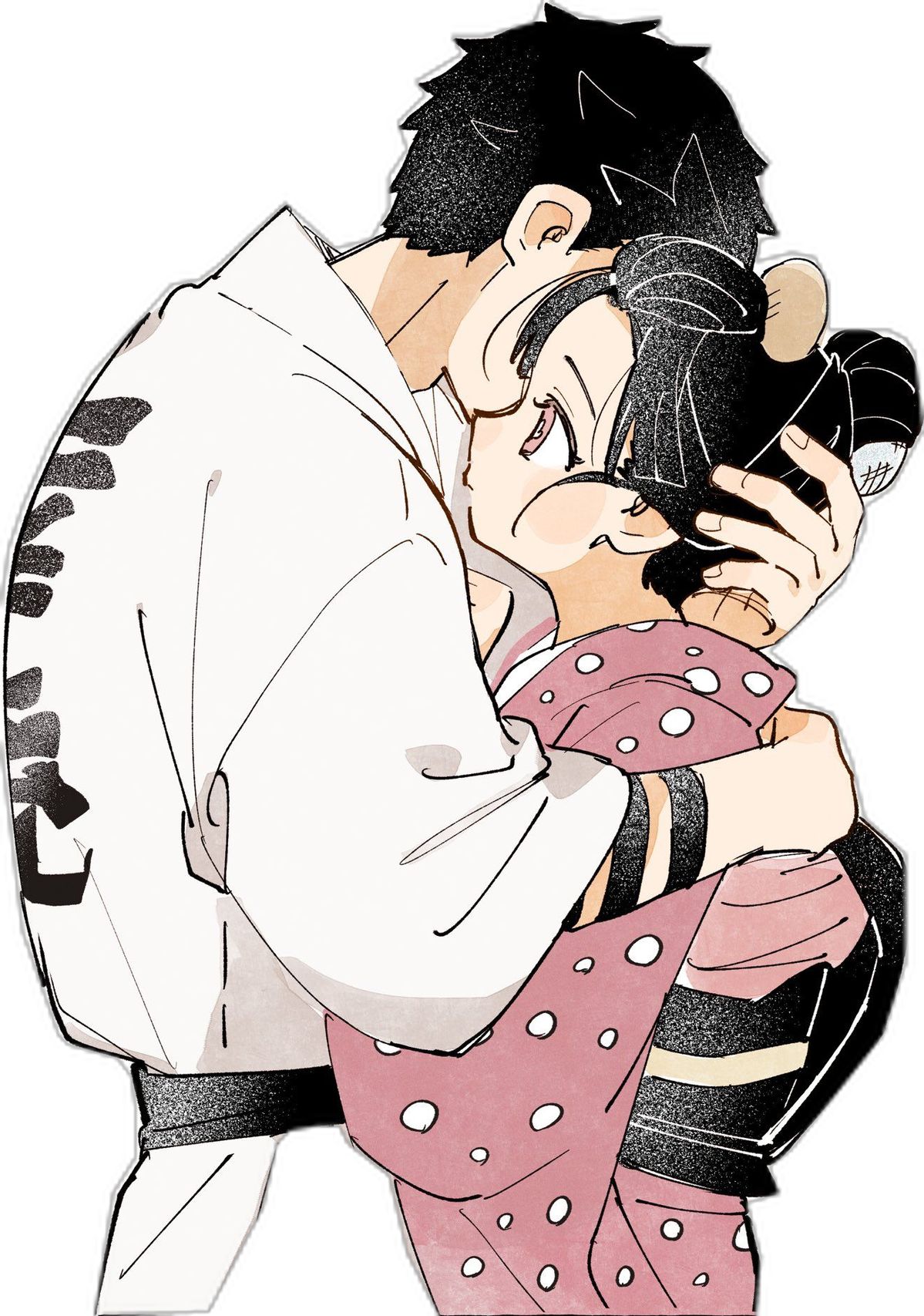
Three years later, Hakuji turned 18 and Koyuki turned 16, and their health began to gradually recover. One day, Keizo proposes to Hakuji that he marry Koyuki and inherit the dojo. Hakuji promises to marry her, harboring the hope and expectation of living a righteous and decent life, just as his father had wished in his will.
However, still burdened by the deep guilt of being a sinner, he asked Koyuki before the fireworks festival if he was truly a decent person. Koyuki comforted him by reminding him of their past missed fireworks and their promise to "see each other next year or the year after." At that moment, Hakuji resolved to become stronger than anyone else and protect Koyuki for the rest of his life.
05-5) Losing Loved Ones and Raging Rampage Again
However, the world was not as easy as Hakuji had hoped. People from neighboring swordsmanship dojos, who were jealous of Keizo, poisoned a well to avoid a direct confrontation with force against Keizo and Hakuji. Hakuji was on a visit to his father's grave to deliver the news, so he was unable to prevent the poisoning, and ultimately, Keizo and Koyuki met their end through poisoning. At this moment, Hakuji deeply blamed himself for not being by the side of his loved ones during a crucial moment. Recalling the memory of the fireworks he had gone to watch with Koyuki, he sobbed and fell into despair on the spot.
05-6) Retribution for Massacring the People of the Swordsmanship Dojo Single-Handed
On the night he lost his mentor Keizo and his fiancée Koyuki, Hakuji stormed into the swordsmanship dojo alone and, relying solely on his bare hands, fists, and kicks, massacred 67 disciples, including the second head of the family. Although they were all wielding real swords, they were helpless against Hakuji's powerful punches and bell-breaking techniques.
According to the testimony of a surviving housekeeper, the scene of Hakuji breaking even real swords and destroying the bodies of his opponents was reminiscent of a scene from hell; blood-soaked corpses with their heads smashed were scattered across the walls and ceiling. This horrific sight shocked everyone who witnessed it, and it is said that even the housekeeper lost consciousness from the shock.
05-7) Conclusion
Hakuji tried to live a humane life to fulfill his father's dying wish. He dreamed of a new life with Keizo and Koyuki and found hope in their love and faith. However, due to the world's cruelty, envy, and hatred, he lost those he cherished and was driven once again down the path of revenge and rage. This series of tragedies became the fundamental background for Hakuji—or rather, Akaza—and his complex and violent inner self, as well as his obsession with strength.
Although he strived for an honest life, the world drove him to such a cruel limit. Through this entire process, Hakuji became a being constantly in conflict between human and demon, and between light and darkness. His story holds special significance in *Demon Slayer* as a character possessing deep sorrow and humanity, transcending the role of a simple villain.

That's All
Thank you!!